
landscape
Places That Rhyme
On the landscape design history connecting three cities — and why some places feel familiar before you understand why.
Field Note
Observation
Some places feel familiar before you understand why.
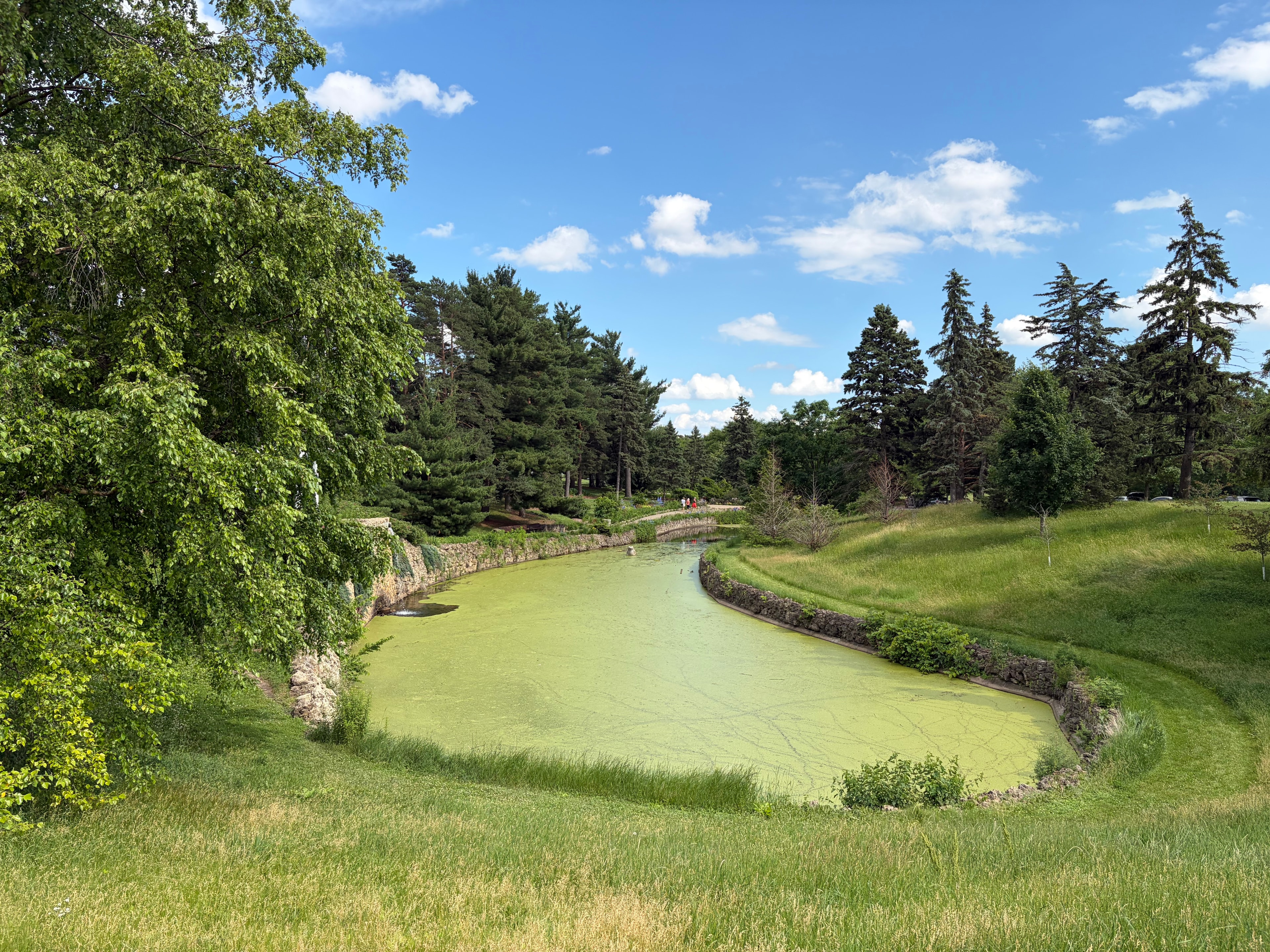
I've had that feeling a number of times walking through Como Park in St. Paul. Something about the mature trees, winding paths, changes between open and enclosed spaces, and the way water becomes part of the experience reminds me of somewhere else.
Sometimes it reminds me of Cazenovia Park and South Park in Buffalo, places I knew growing up. Other parts remind me of Rock Creek Park in Washington, D.C., where I spent years later in life.
These aren't places I would normally think to group together. They're hundreds of miles apart, in three very different cities, and none of them looks exactly like the others. Still, there are moments when walking through one feels strangely like walking through another.
For a long time, I assumed that was simply memory doing what memory does. I've lived in Buffalo, Washington and Minnesota, and each place represents a different period of my life. Of course one might occasionally remind me of another.
But I also have a background in landscape design, and eventually that part of my brain started asking a different question.
Maybe there was a reason these places felt familiar.
Exploration
I studied landscape design years ago, and although I never made it my life's work, it changed the way I look at places. Good landscape design isn't necessarily about creating something beautiful to look at from one particular spot. It's also about what happens as you move through a space. Where does your eye go? What gets revealed around a corner? Where do you feel enclosed, and where does the landscape suddenly open? How do paths move through the terrain? What role do trees, water and topography play?
Eventually you stop consciously thinking about those things, but you don't stop seeing them.
There are places where the landscape doesn't immediately announce that someone designed it. It simply unfolds as you move through it. A path curves through mature trees. The landscape opens toward the water and then closes around you again. The terrain itself seems to suggest where you should go next.
I knew that feeling.
It turns out there may be a reason why.
Buffalo
Cazenovia Park and South Park are part of Buffalo's remarkable system of parks and parkways associated with Frederick Law Olmsted and the firm he established.
Cazenovia came relatively late in the development of that system. Buffalo asked F.L. Olmsted & Co. in 1889 to expand the success of the city's earlier parks into South Buffalo. The firm developed plans for Cazenovia Park during the 1890s, working with a low landscape shaped by Cazenovia Creek. The design incorporated a winding drive, large open spaces, groves of trees and the creek itself as elements of the experience.
The landscape wasn't simply a container for things that would be placed inside it. The landscape was the thing being designed. Water, trees, topography, open space and movement worked together.
South Park approached the problem differently, but it belonged to the same larger idea. Rather than treating each park as an isolated patch of green, Buffalo developed a network in which parks and landscaped parkways became part of the structure of the city itself.
I didn't know any of this when I was growing up there. Cazenovia Park was just Caz Park. These weren't historic examples of American landscape architecture to me. They were simply places that existed in the background of everyday life.
Looking back, I think that's part of what makes the connection interesting. I learned what those landscapes felt like long before I understood why they felt that way.
Washington
Years later, I lived in the Washington, D.C., area, and Rock Creek Park became another one of those places.
One of the things I always loved about Washington was its ability to feel smaller than it actually is. Maybe some of that comes from the relatively low skyline, the classical architecture or the layout of the city. But I think the amount of green woven through Washington has something to do with it too.
Rock Creek may be the best example.
You can be surrounded by buildings, traffic and people and, remarkably quickly, find yourself in the woods beside a creek. The city hasn't disappeared. You know it's still there. But for a while, it doesn't feel particularly important.
Rock Creek is wilder than the Buffalo parks I remember. In places it feels less like an urban park and more like someone somehow managed to leave a river valley intact while a major city grew around it.
Its history makes that impression even more interesting.
Frederick Law Olmsted Sr. didn't design Rock Creek Park, although he advocated for preserving the valley. In 1918, his sons Frederick Law Olmsted Jr. and John Charles Olmsted completed an extensive plan for the park that placed preservation of the valley's natural beauty at the center of everything else.
They treated the creek and its tributaries as the backbone of the park. Woodlands, meadows and the creek valley were understood as different kinds of landscapes. Access mattered, but so did restraint. The goal wasn't to fill the park with attractions. It was to allow people to experience what was already there without destroying it in the process.
That idea feels surprisingly modern.
It also feels familiar.
Minnesota
Then there is Como Park.
Como isn't an Olmsted park. Its early history is tied instead to Horace William Shaler Cleveland, another influential nineteenth-century landscape architect.
In the 1870s, Cleveland urged growing cities to preserve naturally beautiful land before development and rising land values made doing so increasingly difficult. At St. Paul's request, he identified the land around Como Lake as one of those places worth preserving.

When Cleveland was later hired to design St. Paul's parks and parkways, he envisioned Como as a landscape park that worked with the character already there. His use of curving roads carried visitors through changing views rather than imposing a rigid geometry on the landscape.
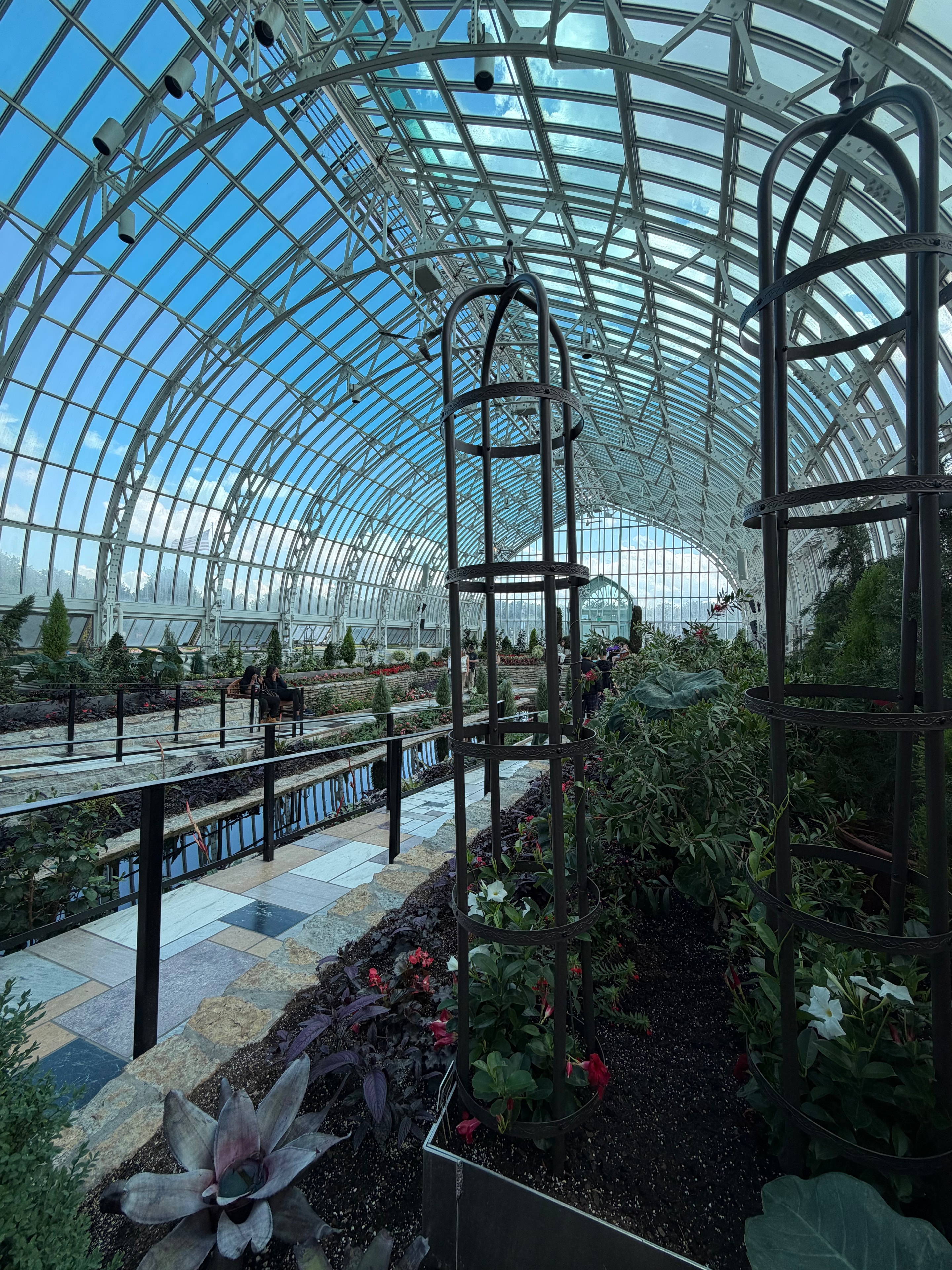
Como continued developing long after Cleveland. The conservatory, zoo, gardens, recreational areas and other features added new layers and changed parts of the original landscape considerably. But some of the underlying ideas survived.
Como Lake is still there. So are wooded areas, changes in topography and meandering paths moving through different kinds of spaces. Walking through it, the city can seem farther away than it really is.
And that's when the connection started making more sense to me.
There isn't a simple historical line connecting these places. Olmsted didn't design Como. Cleveland didn't design Rock Creek. Nobody sat down with plans for Cazenovia Park and decided to reproduce them in Minnesota.
The connection is broader than that.
These landscapes emerged during a period when American cities were growing rapidly and designers and planners were confronting an important question: How do you make room for nature as a city develops around it?
Their answers weren't identical, but some of the underlying ideas were remarkably similar. Work with the landscape rather than against it. Preserve natural features worth preserving. Let water, vegetation and topography become part of the design. Think about how people move through a place and what they experience along the way.
Most importantly, perhaps, create somewhere people can temporarily escape the city without actually leaving it.
There's another layer beneath all of this too — literally.
Landscape designers don't begin with a blank piece of land. They inherit geology, water, topography and vegetation. Rock Creek was shaped around a creek valley. Cazenovia around its creek and lowlands. Como around a lake. Their geology and landscapes aren't identical, but natural processes shaped all three long before anyone began designing them.
Maybe part of good landscape design is simply knowing when to pay attention to what's already there.
Reflection
History explains more of the connection than I expected, but it doesn't explain everything.
I can't separate Cazenovia and South Park from growing up in Buffalo. Rock Creek belongs to another period of my life in Washington. Como belongs to the life I know now in Minnesota.
Maybe that's why I've started thinking of these places as rhymes. A rhyme isn't a repetition. The words aren't identical. There's simply something familiar enough in one to make you hear the other. Places can do that too. Sometimes history explains why. Sometimes design does. Sometimes it's the landscape itself. And sometimes it's simply what we bring with us.
The longer we live, the more places we carry around. New ones get added to old ones until, every once in a while, somewhere we're standing reminds us of somewhere we've been. Eventually, the places we've known begin talking to one another.
They aren't the same.
They just rhyme.
Shared Reflection
What are some places that rhyme in your life?
Historical Notes & Sources
The historical details concerning Cazenovia Park and the Olmsted firm's work in Buffalo are drawn primarily from the Frederick Law Olmsted National Historic Site and National Park Service resources concerning Cazenovia Park and Buffalo's Olmsted park system.
Information about the 1918 Olmsted Brothers plan for Rock Creek Park and its emphasis on preserving the natural character of the creek valley comes from the National Park Service's Rock Creek Park historical resources.
Information about Horace W. S. Cleveland, the early preservation of the Como Lake landscape and the development of Como Park comes from the City of Saint Paul's park history and Como Regional Park planning documents.
An Invitation
What are some places that rhyme in your life?
Shared Reflections
Every Field Note is an invitation rather than a conclusion. If this one reminded you of a memory, a place, a question, or a discovery of your own, I'd enjoy hearing where it led you.